Hyperbaric oxygen therapy (HBOT) is one of the fastest-growing segments in health and wellness. As consumer awareness of oxygen therapy expands beyond traditional medical settings into sports recovery, longevity, and general wellness, entrepreneurs and healthcare providers alike are recognizing the opportunity to build profitable HBOT businesses. Whether you are a physician looking to add hyperbaric services to your practice, a wellness entrepreneur opening a new facility, or a sports recovery specialist expanding your offerings, this guide covers the essential steps to launching a successful HBOT business.
From selecting the right chambers and designing your facility to navigating regulatory requirements and building a sustainable business model, the decisions you make early on will shape the long-term success of your venture. This comprehensive guide walks you through each critical step in the process.
The Growing Demand for HBOT Services
The demand for hyperbaric oxygen therapy has expanded significantly beyond its traditional medical applications. While HBOT remains a critical treatment for FDA-cleared conditions such as diabetic foot ulcers, carbon monoxide poisoning, and radiation tissue damage, the market has grown to encompass several new and rapidly expanding segments.
The sports recovery market represents one of the most visible drivers of HBOT adoption. Professional athletes across the NFL, NBA, MLB, and international sports leagues have publicly embraced hyperbaric oxygen therapy as part of their recovery regimens. This high-profile endorsement has created strong consumer awareness and demand among amateur athletes, weekend warriors, and fitness enthusiasts who want access to the same recovery tools used by elite performers.
The longevity and anti-aging market is another powerful growth driver. Research published in the journal Aging (Hachmo et al., 2020) from Tel Aviv University explored the effects of HBOT on biological markers of aging, generating significant interest in the wellness and longevity communities. This has led to increased demand for HBOT services at wellness centers, longevity clinics, and integrative health practices.
General wellness consumers are also fueling growth. As people become more proactive about their health and seek non-invasive approaches to support their well-being, HBOT has emerged as a sought-after wellness service. This broad consumer interest creates opportunities for a variety of business models, from standalone HBOT clinics to add-on services within existing health and wellness practices.
Types of HBOT Businesses
One of the first decisions you will make is what type of HBOT business to operate. Each model has its own advantages, target market, and regulatory considerations.
Medical clinics and wound care centers represent the most established HBOT business model. These facilities operate under physician oversight and treat FDA-cleared conditions. They typically use clinical-grade chambers capable of higher pressures and may bill insurance for covered indications. This model requires the most significant regulatory compliance but also offers access to insurance reimbursement.
Wellness centers and longevity clinics focus on offering HBOT as part of a broader wellness service menu. These businesses typically offer mild hyperbaric therapy at 1.3 ATA and position their services around general wellness, recovery, and vitality. They often attract health-conscious consumers, biohackers, and individuals interested in proactive health management.
Med spas and integrative health practices can incorporate HBOT as a premium offering alongside other services such as IV therapy, cryotherapy, and regenerative treatments. Adding hyperbaric therapy can increase average client spend and differentiate a practice in a competitive market.
Sports recovery facilities cater to athletes and active individuals seeking optimized recovery. These businesses often combine HBOT with other modalities such as compression therapy, cold plunging, and infrared saunas. They may serve professional sports teams, college athletic programs, and individual athletes.
Chiropractic offices and physical therapy practices are increasingly adding HBOT to complement their existing services. Hyperbaric therapy can serve as a natural extension of recovery-focused care, providing additional value to existing patients while attracting new clients specifically seeking HBOT services.
Choosing the Right Hyperbaric Chambers
Chamber selection is one of the most important decisions in your business plan. The chambers you choose will determine your service capabilities, facility requirements, and operational workflow. OxyHealth manufactures the full range of chambers needed for any HBOT business model, from portable units ideal for wellness settings to clinical systems built for high-volume medical use.
Portable Chambers for Wellness and Recovery
OxyHealth portable chambers operate at 1.3 ATA and are ideal for wellness centers, sports recovery facilities, and practices offering mild hyperbaric therapy. These chambers offer a lower facility footprint, simpler installation, and straightforward operation.
The Vitaeris 320 is OxyHealth's flagship portable chamber and the most widely used portable hyperbaric chamber in the world. Its spacious interior, ease of operation, and proven track record make it a top choice for businesses looking to offer a premium client experience in a portable format.
The Quamvis 320 offers a versatile option for practices that want clinical-level build quality in a portable form factor. It is well-suited for chiropractic offices, physical therapy clinics, and multi-modality wellness centers.
The Respiro 270 provides a compact, efficient option for businesses with limited space or those looking to maximize the number of chambers per square foot. Its smaller footprint makes it practical for facilities operating multiple chambers in a single location.
Clinical Chambers for Medical Facilities
For medical clinics and facilities treating FDA-cleared conditions, OxyHealth clinical chambers deliver the higher pressures and medical-grade construction required for clinical protocols.
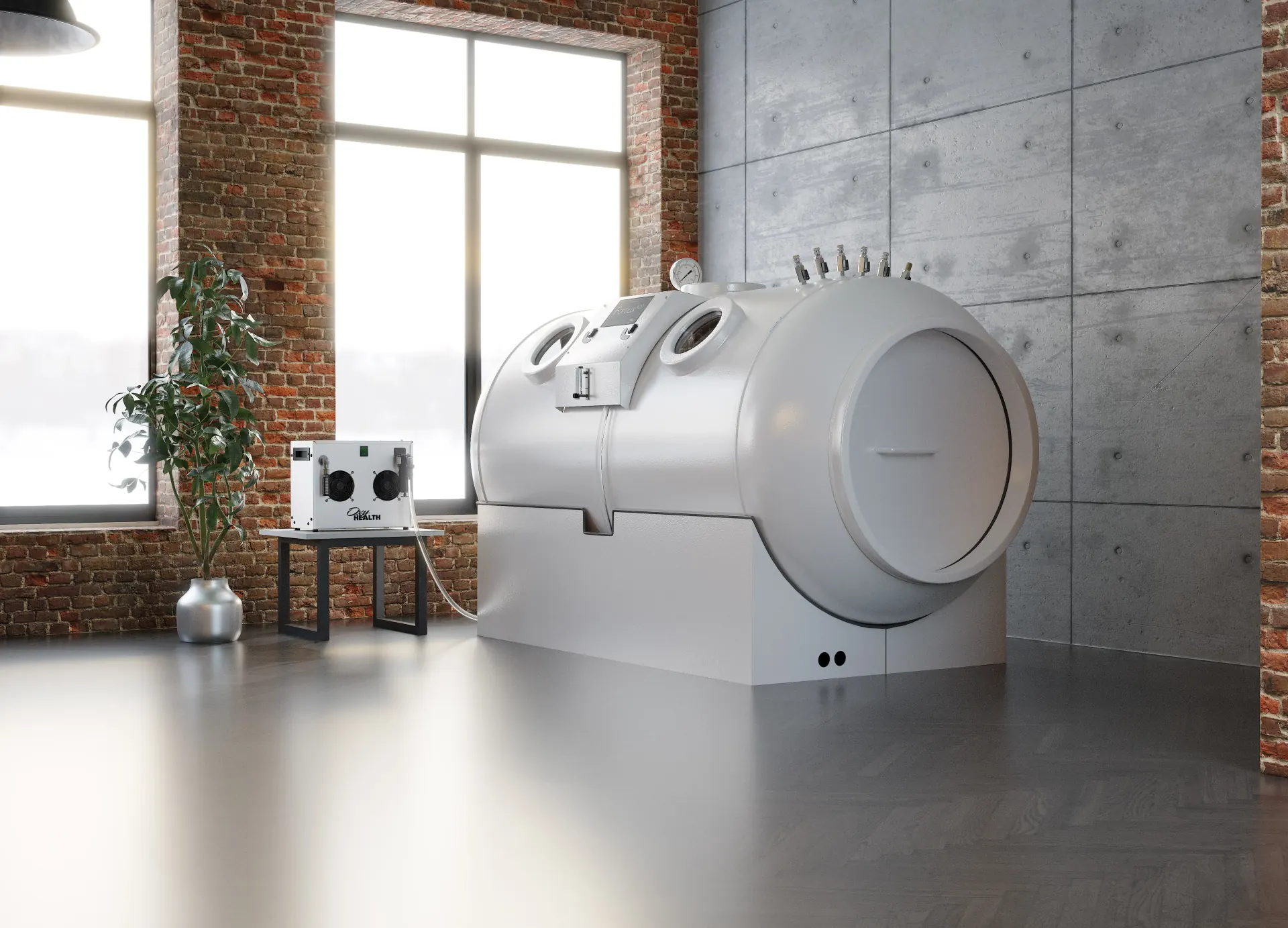
The Fortius 420 is OxyHealth's premier clinical hyperbaric chamber, engineered for medical facilities that require higher pressure capabilities. Built to ASME PVHO-1 standards with a durable steel construction, the Fortius 420 supports the rigorous protocols used in wound care, hospital-based HBOT programs, and specialty clinics.
The Fortius 420 EXP offers an expanded interior for enhanced patient comfort during longer clinical sessions. It is designed for facilities that prioritize the patient experience while maintaining full clinical capabilities. Both Fortius models are built for high-volume daily use and long-term durability in demanding clinical environments.
Facility Requirements and Planning
Proper facility planning is essential for a safe, efficient, and compliant HBOT operation. The physical space you choose and how you configure it will impact client experience, staff workflow, and regulatory compliance.
Space planning: Each hyperbaric chamber requires a dedicated treatment room with enough clearance for safe operation, client entry and exit, and operator access. Plan for a reception and waiting area, a consultation or intake room, restrooms, and storage for supplies and equipment. If you plan to scale your business, consider leasing a space that allows for additional treatment rooms in the future.
Electrical requirements: Hyperbaric chambers and their compressor systems require reliable electrical service. Work with a licensed electrician to ensure your facility has adequate power capacity, properly rated circuits, and backup power considerations. Clinical chambers like the Fortius 420 may require dedicated electrical circuits. OxyHealth provides detailed electrical specifications for each chamber model.
Ventilation and air quality: Proper ventilation is critical in any HBOT facility. Treatment rooms should have adequate air exchange to manage the oxygen-enriched environment around the chambers. Consult with an HVAC professional experienced in medical or oxygen-related facilities to ensure your ventilation system meets safety standards and local building codes.
ADA compliance: Your facility must comply with the Americans with Disabilities Act (ADA) requirements. This includes accessible entrances, doorways wide enough for wheelchair access, accessible restrooms, and consideration for how clients with mobility limitations will enter and exit the hyperbaric chambers. Accessible facility design is not only a legal requirement but also demonstrates your commitment to serving all clients.
Regulatory Considerations
Navigating the regulatory landscape is one of the more complex aspects of starting an HBOT business. Requirements vary significantly by state and by the type of services you plan to offer.
State licensing: Many states have specific regulations governing the operation of hyperbaric chambers. Some states classify HBOT facilities as healthcare establishments requiring state health department licensure, while others may have more flexible frameworks for wellness-oriented services. Research your state's requirements thoroughly and consult with a healthcare regulatory attorney before committing to a location or business model.
Physician oversight: The level of physician involvement required depends on your business model and state regulations. Medical clinics treating FDA-cleared conditions typically require a licensed physician to serve as medical director and to prescribe HBOT treatments. Wellness centers offering mild hyperbaric therapy may operate under different oversight requirements. Regardless of legal minimums, having a physician or qualified healthcare professional involved in your operation is widely considered a best practice.
Insurance and liability: Obtain comprehensive business insurance that specifically covers hyperbaric oxygen therapy services. This should include professional liability (malpractice) insurance, general liability insurance, and property insurance covering your chambers and equipment. Work with an insurance broker experienced in healthcare or medical device businesses to ensure adequate coverage. If you plan to bill health insurance for HBOT treatments, you will also need to navigate payer credentialing and billing compliance.
Building Your Business: Staffing, Training, and Marketing
Staffing: Your staffing needs will depend on your business model and volume of clients. At minimum, you will need trained chamber operators, a front desk or client services coordinator, and, for medical clinics, clinical staff under physician oversight. As your business grows, consider adding roles for marketing, community outreach, and client education. Hiring staff with backgrounds in healthcare, fitness, or wellness can be an advantage, as they often bring relevant knowledge and professional networks.
Training: Thorough training is non-negotiable. Every staff member who operates a hyperbaric chamber must understand pressurization and depressurization procedures, safety protocols, emergency response procedures, client screening and contraindications, and proper chamber maintenance. OxyHealth provides comprehensive operator training with every chamber purchase. For clinical settings, consider pursuing additional certifications from recognized hyperbaric medicine organizations to elevate your team's expertise and your facility's reputation.
Marketing and client education: Because hyperbaric oxygen therapy is still relatively new to many consumers, education-driven marketing is one of the most effective strategies. Create high-quality content that explains what HBOT is, how it works, and what the published research shows. Build a professional website optimized for local search terms like "hyperbaric oxygen therapy near me" and "HBOT clinic." Establish referral relationships with local physicians, physical therapists, chiropractors, and sports medicine practitioners. Social media, community events, and facility tours can also help raise awareness and build trust with potential clients.
Financing Your HBOT Business
Acquiring hyperbaric chambers represents one of the largest capital investments in starting an HBOT business. Fortunately, financing options are available to help you manage this investment while preserving working capital for other startup expenses such as facility build-out, marketing, staffing, and operating reserves.
OxyHealth partners with Brickhouse Capital to offer flexible financing solutions designed for healthcare and wellness businesses. Financing can help you start generating revenue from your chambers while spreading the investment over time. This approach allows many entrepreneurs to open their doors sooner and begin building their client base without depleting all of their startup capital on equipment alone.
When evaluating the financial viability of your HBOT business, consider the full picture: chamber acquisition, facility costs, staffing, insurance, marketing, and ongoing operational expenses. A detailed business plan with realistic revenue projections will help you determine the right financing structure and timeline to profitability. Contact OxyHealth to discuss financing options and learn how other successful HBOT businesses have structured their investments.
Why Chamber Certifications Matter for Commercial Use
When purchasing hyperbaric chambers for a commercial or clinical setting, certifications are not optional. They are essential for regulatory compliance, client safety, insurance coverage, and the credibility of your business. Every chamber in your facility should carry the following key certifications:
FDA 510(k) Clearance: All hyperbaric chambers used commercially should be cleared by the U.S. Food and Drug Administration as Class II medical devices. FDA clearance verifies that the chamber meets safety and effectiveness standards for its intended use. Operating non-FDA-cleared chambers in a commercial setting can expose your business to significant legal and regulatory risk.
ASME PVHO-1: The American Society of Mechanical Engineers Pressure Vessels for Human Occupancy standard is the recognized benchmark for the structural integrity and safety of hyperbaric chambers. ASME PVHO-1 certification means the chamber has been designed, manufactured, and tested to withstand the pressures it will operate under with appropriate safety margins.
ISO 13485: This international standard specifies requirements for a quality management system specific to the medical device industry. Chambers manufactured under ISO 13485 are produced with consistent, documented quality control processes from design through production and delivery.
UL Listing: Underwriters Laboratories certification ensures that the electrical components of the hyperbaric chamber system have been tested and meet safety standards. UL listing is particularly important for commercial settings where equipment operates continuously and must meet strict electrical safety codes.
OxyHealth chambers carry all four of these certifications, providing the highest level of assurance for commercial operators. Choosing fully certified equipment protects your business, your clients, and your reputation. Learn more about OxyHealth's safety standards and certifications on the HBOT for business page.