Evaluation Framework
How to Compare Hyperbaric Chambers
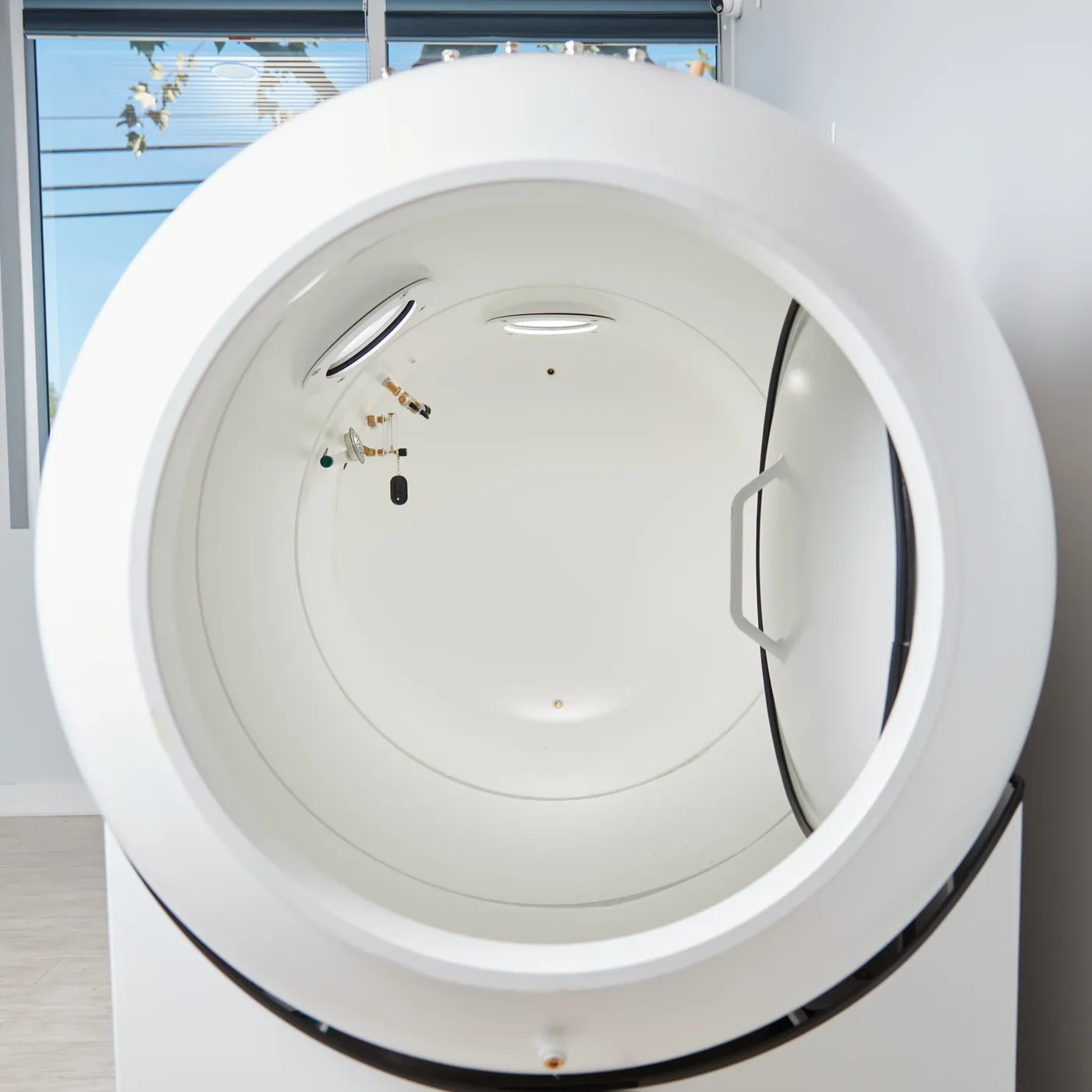
A hyperbaric chamber is a pressurized medical device designed for human occupancy. Choosing the right one requires more than comparing features on a website. You need a clear framework for evaluating the safety, quality, and credibility of each manufacturer. The stakes are too high to rely on marketing claims alone.
When comparing hyperbaric chambers, focus on five key areas: safety certifications, manufacturer track record, build quality and materials, warranty and support, and the ability to provide verifiable documentation. Any manufacturer that cannot transparently answer questions in all five of these areas should be approached with caution.
Safety Certifications
The foundation of any legitimate comparison. Does the chamber hold FDA 510(k) clearance, ASME PVHO-1 certification, ISO 13485, and UL listing? These are independent, verifiable standards that confirm the device has been tested and reviewed.
Manufacturer Track Record
How long has the manufacturer been building chambers? How many units have they deployed? How many physicians recommend their products? Longevity and scale are indicators of reliability and real-world validation.
Build Quality and Materials
What materials are used in construction? Are the chambers built in a facility that meets medical device manufacturing standards? Inferior materials or inconsistent manufacturing processes can compromise safety over time.
Warranty and Support
What does the warranty cover, and for how long? Is customer support based in the same country as the buyer? Can the manufacturer provide replacement parts and service promptly? These details matter long after the initial purchase.
Verifiable Documentation
Can the manufacturer provide their FDA 510(k) clearance letter, ASME GR-1 form, ISO 13485 certificate, and UL listing number upon request? Transparency is the hallmark of a manufacturer that stands behind its products.
This framework applies regardless of whether you are purchasing a portable chamber for home use or a clinical chamber for a medical facility. The underlying safety standards and verification process should be the same for any device that pressurizes a human occupant.
The Gold Standard
The Certification Standard
Four independent certifications define the safety standard for hyperbaric chambers. Each one addresses a different dimension of device safety, and together they provide comprehensive assurance that a chamber is safe for human use. OxyHealth is the only portable hyperbaric chamber manufacturer that holds all four.
FDA 510(k) Clearance
What it is:
The FDA 510(k) process requires manufacturers to submit a premarket notification demonstrating that their device is substantially equivalent to a legally marketed predicate device in terms of safety and effectiveness. The FDA reviews the submission and issues a formal clearance decision.
Why it matters:
This is the only FDA pathway that involves actual regulatory review of the device. It confirms that an independent federal agency has evaluated the chamber and determined it meets safety requirements for its intended use as a Class II medical device.
ASME PVHO-1
What it is:
The American Society of Mechanical Engineers (ASME) Pressure Vessels for Human Occupancy (PVHO-1) standard establishes requirements for the design, materials, fabrication, inspection, and testing of pressure vessels intended for human occupancy.
Why it matters:
A hyperbaric chamber is, at its core, a pressure vessel with a person inside. ASME PVHO-1 certification means the chamber has been engineered and tested specifically for the stresses of repeated pressurization cycles with human occupants. Without this certification, there is no independent validation that the vessel can safely contain pressure.
ISO 13485
What it is:
ISO 13485 is the international quality management standard specifically designed for medical device manufacturers. It requires documented processes for design, production, installation, and servicing, along with full traceability of components and regular third-party audits.
Why it matters:
This certification ensures that the manufacturing facility follows rigorous, audited quality controls. Every chamber produced under ISO 13485 is built using the same documented processes, materials, and quality checks. Without this standard, there is no assurance of manufacturing consistency from one unit to the next.
UL Listing
What it is:
Underwriters Laboratories (UL) testing and certification covers the electrical components and systems of the chamber. UL listing means that the electrical systems have been independently tested for fire, shock, and related safety hazards.
Why it matters:
Hyperbaric chambers operate in oxygen-enriched environments where electrical faults pose heightened risks. UL listing provides independent verification that the electrical systems meet recognized safety standards, reducing the risk of electrical hazards during chamber operation.
Any manufacturer that cannot demonstrate all four of these certifications has not met the full spectrum of safety, quality, and performance standards available for hyperbaric devices. When comparing chambers, these certifications should be your starting point.
Critical Distinction
FDA 510(k)-Cleared vs. FDA Registered
These Are Not the Same Thing
One of the most common and potentially dangerous sources of confusion in the hyperbaric chamber market is the difference between FDA registration and FDA 510(k) clearance. Some manufacturers prominently advertise that their chambers are "FDA registered," which can create a misleading impression of safety validation. Understanding the difference is essential for any buyer.
FDA Registered
- Manufacturer notifies the FDA they exist
- Device is listed in the FDA database
- No safety review is conducted
- No testing or evaluation of the device
- No clearance decision is issued
- Any company can register regardless of safety standards
- Registration does not validate device safety or effectiveness
FDA 510(k)-Cleared
- Manufacturer submits a premarket notification to the FDA
- FDA reviews evidence of safety and substantial equivalence
- Device is evaluated against a legally marketed predicate device
- FDA issues a formal clearance decision with a K-number
- Clearance is publicly searchable at accessdata.fda.gov
- Represents actual regulatory review of the device
- All OxyHealth chambers are FDA 510(k)-cleared
This distinction is not a minor technicality. FDA registration involves zero review of the device itself. A manufacturer can register any device with the FDA without submitting any evidence of safety, testing, or performance. FDA 510(k) clearance, by contrast, requires the manufacturer to demonstrate that the device meets established safety standards through a formal review process.
When you see a chamber marketed as "FDA registered," understand that this designation tells you only that the manufacturer notified the FDA of their existence. It does not mean the device has been reviewed, tested, or approved for safety. Always ask for the 510(k) clearance number and verify it independently in the FDA database.
Proven Track Record
OxyHealth by the Numbers
When comparing hyperbaric chamber manufacturers, the numbers tell a clear story. OxyHealth has built the largest installed base, the deepest physician trust, and the most comprehensive certification profile in the industry.
19,000+
Chambers Installed
More chambers deployed globally than any other manufacturer.
3,000+
Physicians
Medical professionals worldwide trust OxyHealth.
29+
Years Manufacturing
Nearly three decades of hyperbaric chamber manufacturing.
50+
Countries
OxyHealth chambers are used on every inhabited continent.
4
Certifications
FDA 510(k), ASME PVHO-1, ISO 13485, and UL listing.
These numbers are not marketing claims. They represent the cumulative result of over two decades of manufacturing, continuous quality improvement, and building trust with the medical community one chamber at a time. When physicians recommend a hyperbaric chamber to their patients, OxyHealth is the brand they choose.
No other portable hyperbaric chamber manufacturer can match this combination of installed base, physician endorsement, global reach, manufacturing longevity, and certification completeness. These are the metrics that matter when your comparison is based on verified facts rather than marketing language.
Buyer Checklist
What to Ask Before Buying Any Chamber
Before purchasing a hyperbaric chamber from any manufacturer, use this checklist to verify safety, quality, and credibility. Do not rely solely on marketing materials or website claims.
Can they provide the FDA 510(k) clearance letter?
Ask for the 510(k) clearance number (K-number) and verify it in the FDA database at accessdata.fda.gov. If the manufacturer can only provide an FDA registration number or establishment listing, that is not 510(k) clearance and does not demonstrate that the device has been reviewed for safety.
Can they provide the ASME PVHO-1 GR-1 form?
The GR-1 form is the official ASME documentation that confirms a pressure vessel has been designed, fabricated, and tested to PVHO-1 standards. If a manufacturer claims ASME compliance but cannot produce this form, the claim is not verified.
Can they show the ISO 13485 certificate?
ISO 13485 certification is issued by accredited third-party auditors. Ask for a copy of the certificate and verify that it is current, as ISO certifications require regular renewal through re-audits. Check that the scope of the certificate covers hyperbaric chamber manufacturing.
Are the electrical components UL listed?
UL listing can be verified through the UL product database. Ask the manufacturer for their UL file number and confirm that the listing covers the electrical components used in the chamber. This is particularly important for hyperbaric chambers because they operate in oxygen-enriched environments.
What does the warranty cover, and for how long?
Understand exactly what is covered by the warranty, including the chamber itself, the compressor system, and any accessories. Ask about the process for filing a warranty claim and the typical turnaround time for repairs or replacements.
Where is customer support located?
Knowing where the manufacturer customer support team is based matters for responsiveness and communication. Ask whether support is available by phone, how quickly they respond to inquiries, and whether they can dispatch service technicians if needed.
OxyHealth welcomes these questions and provides full certification documentation to prospective buyers upon request. Transparency is not optional when the product is a pressurized medical device intended for human use.
Product Lineup
OxyHealth Chamber Models
OxyHealth offers five hyperbaric chamber models designed for a range of use cases, from daily home wellness to advanced clinical treatment. Every model carries full FDA 510(k) clearance, ASME PVHO-1 certification, ISO 13485 manufacturing standards, and UL listing.
Vitaeris 320
1.3 ATA
The most popular portable hyperbaric chamber in the world. Spacious interior with room to sit up, read, or use a device during sessions. Ideal for daily wellness routines, athletic recovery, and family use.
- Largest portable chamber
- Easy home setup
- Quiet operation
Respiro 270
1.3 ATA
A compact portable hyperbaric chamber designed for smaller spaces without compromising quality or comfort. Carries the same four certifications as every OxyHealth chamber.
- Compact footprint
- Travel-friendly
- Same 4 certifications
Fortius 420
Up to 4.0 ATA
A clinical-grade hyperbaric chamber built for medical clinics, wound care centers, and sports medicine facilities. Engineered for high-volume daily use with durable, medical-grade construction.
- Clinical-grade pressure
- High-volume use
- Medical-grade build
Fortius 420 EXP
Up to 4.0 ATA
A split-design clinical hyperbaric chamber that simplifies installation and access in medical environments. Offers the same clinical performance as the Fortius 420 with a modular design that fits through standard doorways.
- Split-design transport
- Fits standard doorways
- Same clinical performance
Quamvis 320
Up to 1.5 ATA
Clinical performance in a versatile form factor. Trusted by physicians and clinicians for professional treatment protocols requiring higher pressures.
- Versatile clinical use
- Up to 1.5 ATA
- Physician trusted
Frequently Asked Questions
Hyperbaric Chamber Comparison FAQ
The most important factor when comparing hyperbaric chambers is safety certification. A hyperbaric chamber is a pressurized medical device designed for human occupancy, and the certifications it holds directly reflect whether it has been rigorously tested and reviewed for safe use. Look for four key certifications: FDA 510(k) clearance, ASME PVHO-1, ISO 13485, and UL listing. OxyHealth is the only portable hyperbaric chamber manufacturer in the world that holds all four of these certifications.
FDA 510(k) clearance and FDA registration are fundamentally different. FDA registration means a manufacturer has notified the FDA that they exist and listed their device in the FDA database. It involves no safety review whatsoever. FDA 510(k) clearance requires the manufacturer to submit a premarket notification demonstrating that the device is substantially equivalent to a legally marketed predicate device. The FDA reviews the submission and issues a formal clearance decision. You can verify any 510(k) clearance by searching the FDA database at accessdata.fda.gov for the manufacturer name and K-number.
The best hyperbaric chambers hold four certifications: FDA 510(k) clearance (verifying safety through regulatory review), ASME PVHO-1 (the pressure vessel standard for human occupancy), ISO 13485 (the international quality management standard for medical device manufacturing), and UL listing (independent testing of electrical components for fire, shock, and safety hazards). A chamber missing any of these certifications has not met the full spectrum of safety standards available for hyperbaric devices.
OxyHealth has invested in obtaining all four major safety certifications because the company believes that pressurized medical devices designed for human occupancy should meet the highest possible safety standards. Obtaining each certification requires significant investment in engineering, manufacturing infrastructure, quality management systems, and ongoing compliance audits. OxyHealth has maintained these certifications across all of its chamber models for over two decades, which reflects a sustained commitment to safety rather than a one-time effort.
Before purchasing any hyperbaric chamber, ask the manufacturer these questions: Can you provide your FDA 510(k) clearance number and clearance letter? Can you provide your ASME PVHO-1 GR-1 form? Is your manufacturing facility ISO 13485 certified? Are your electrical components UL listed? What is included in the warranty? Where is your customer support team located? How long have you been manufacturing chambers? A reputable manufacturer will answer all of these questions with verifiable documentation.
OxyHealth is the global leader in hyperbaric chamber manufacturing, with over 19,000 chambers delivered worldwide and more than 3,000 physicians trusting OxyHealth technology. OxyHealth is the only portable hyperbaric chamber manufacturer that holds all four major safety certifications: FDA 510(k) clearance, ASME PVHO-1, ISO 13485, and UL listing. With 29 years of manufacturing experience and chambers installed in over 50 countries, OxyHealth has the longest track record and most comprehensive certification profile in the industry.
Portable hyperbaric chambers are designed for home use and typically operate at 1.3 ATA (mild hyperbaric therapy). They are lightweight, easy to set up, and designed for daily wellness routines. Clinical hyperbaric chambers are built for medical facilities and can reach higher pressures up to 4.0 ATA. They feature more durable construction designed for high-volume daily use in professional settings. OxyHealth manufactures both types, and all models carry the same four safety certifications regardless of whether they are portable or clinical.
Always verify certification claims independently. Search the FDA 510(k) database at accessdata.fda.gov for the manufacturer name and device. Ask for the ASME PVHO-1 GR-1 form, which documents compliance with the pressure vessel standard. Request the ISO 13485 certificate and verify the issuing body. Check the UL product database for the manufacturer listing. A manufacturer that stands behind its products will welcome this level of scrutiny and provide documentation willingly. OxyHealth publishes its certification documentation and encourages prospective buyers to verify every claim.
Learn More